
The Martaki Bracelet: Greece’s Sweetest Welcome to Spring
A tiny red-and-white thread with ancient roots, worn every March to welcome the sun, protect children, and celebrate the season’s return.
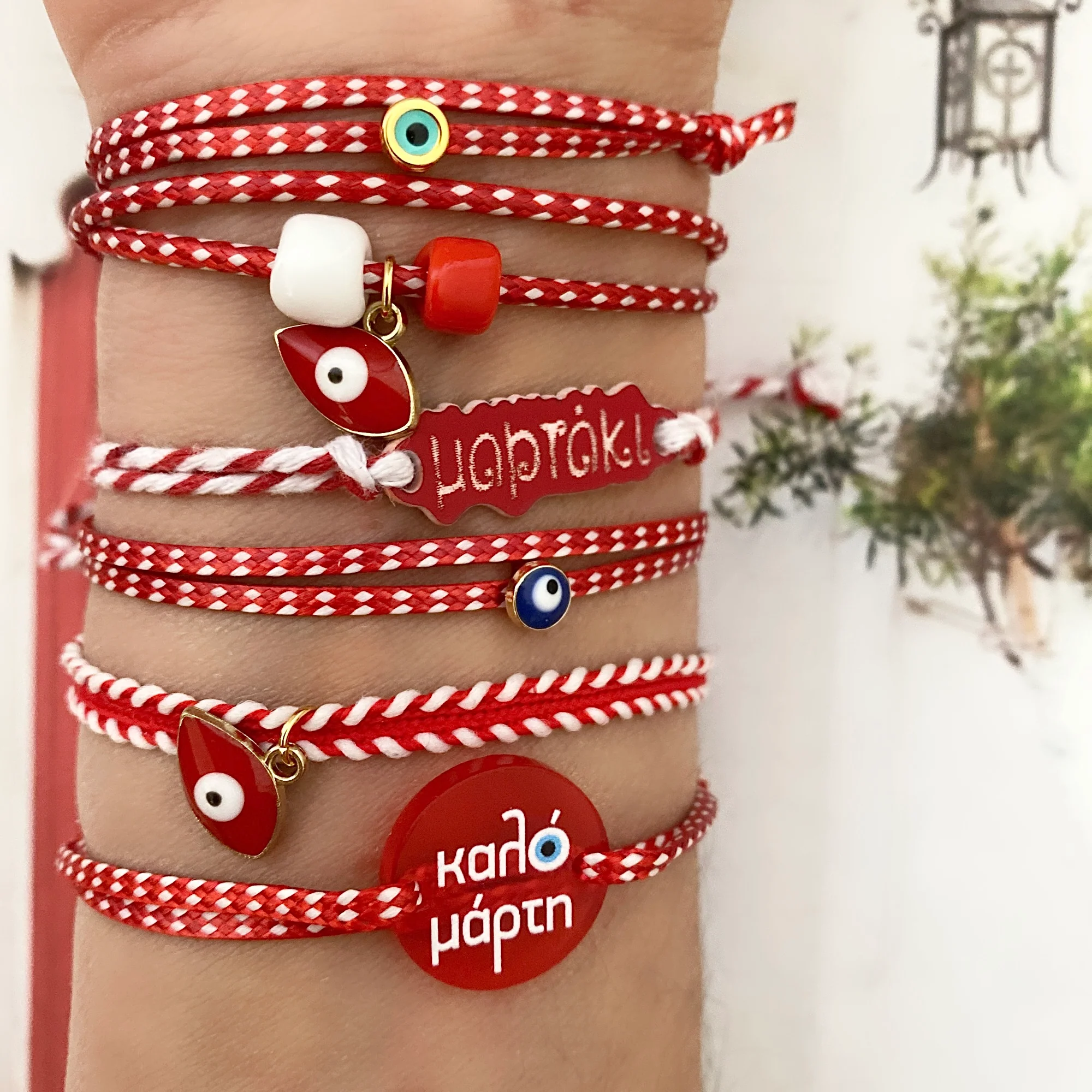
🌞 What Is the Martaki?
If you’ve ever spent March in Greece, you’ve probably noticed children — and plenty of adults — wearing a delicate red and white string bracelet tied around their wrist.
This simple thread is called the Martaki (Μαρτάκι), also known as Martis (Μάρτης). It is traditionally worn from March 1st until the end of the month as a form of protection from the early spring sun.
March weather in Greece is famously unpredictable — bright sunshine one moment, cold wind the next. There’s even a popular saying:
It reflects how deceptively strong the March sun can be — and why protection became symbolic.
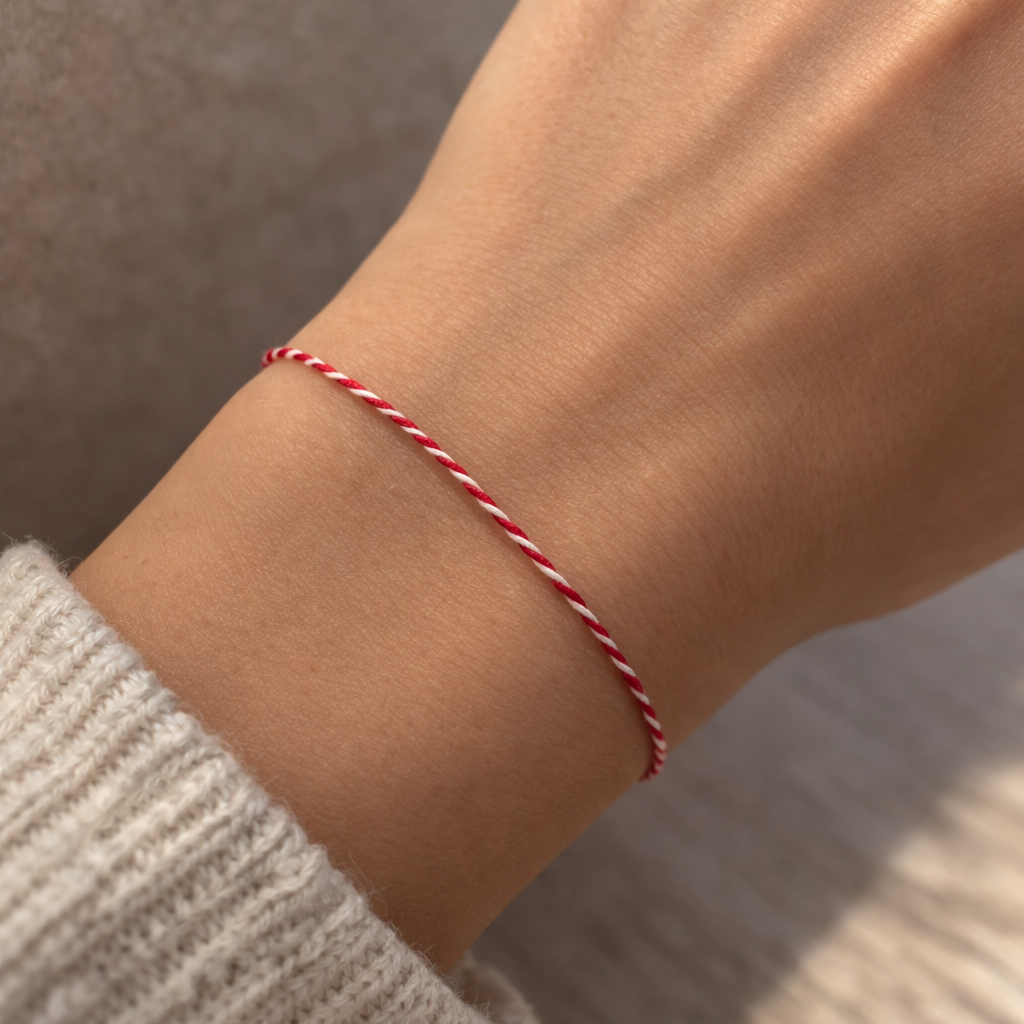
🔴⚪ The Meaning Behind the Colors
The two threads are simple, but deeply symbolic:
Together, they represent the balance between winter and spring — the transition from darkness to light and a hopeful fresh start for the season ahead.
🏛 Ancient Origins & Historical Roots
The Martaki tradition has roots that may reach back to ancient Greece, possibly connected to the Eleusinian Mysteries — sacred rites honoring Demeter and Persephone.
During these ceremonies, participants are said to tie a protective thread called a krokē around the wrist and ankle. Over time, this evolved into the March bracelet tradition we know today.
Fun fact
Similar traditions exist across the Balkans and beyond — but Greece’s Martaki remains uniquely linked to the March sun and the start of spring.
Neighbor traditions
- Bulgaria: Martenitsa
- Romania: Mărțișor
🗓 When Do You Wear It?
The traditional timing is simple:
- Put it on: March 1st
- Take it off: March 31st (or earlier depending on custom)
But what happens after you take it off? That’s where regional traditions make it extra beautiful.
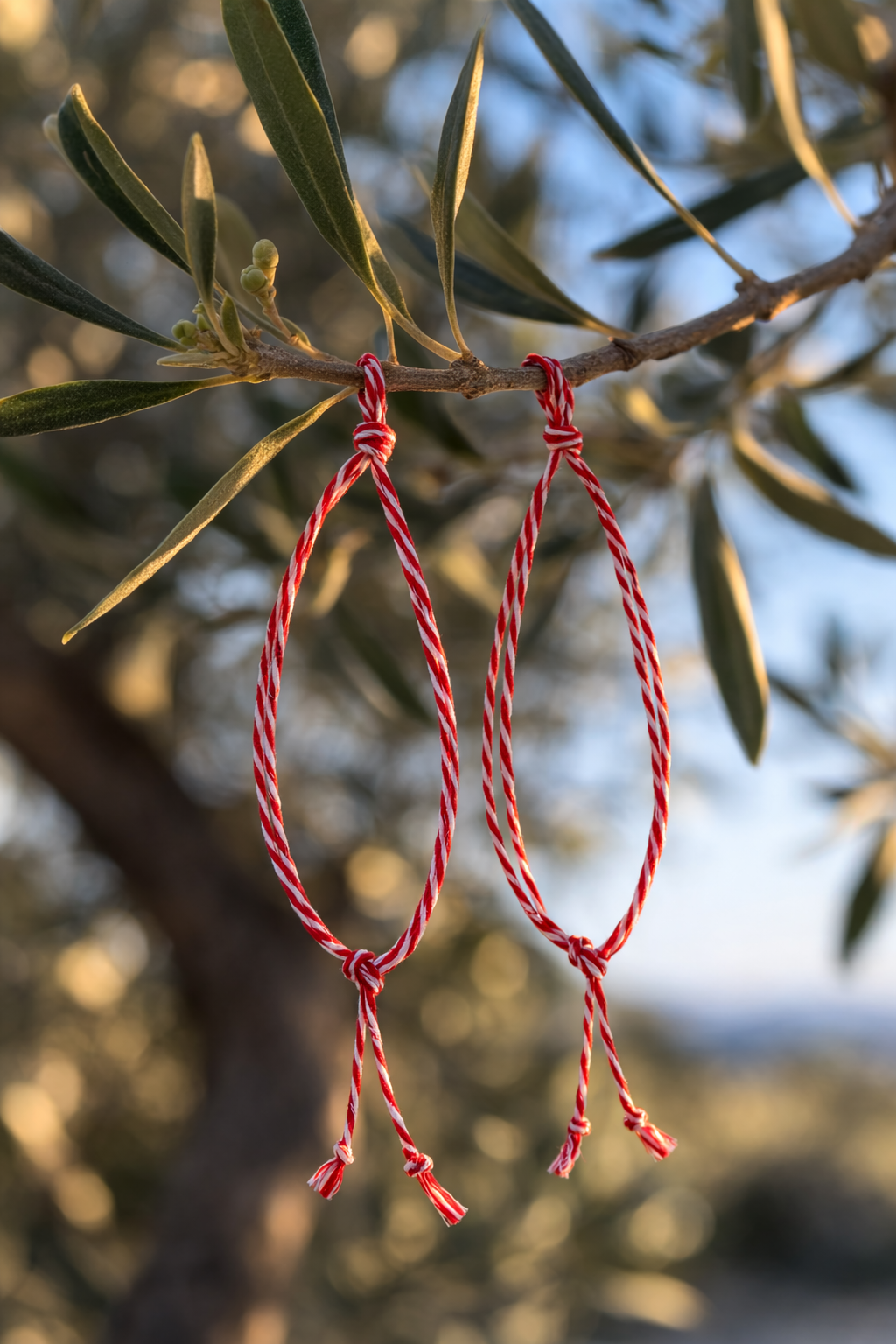
Common endings: tie it onto a blooming tree 🌳, remove it when you see the first swallow 🐦, burn it with Easter flame 🔥, or (in some coastal areas) toss it into the sea 🌊.
In Crete, many families still tie it to almond or pomegranate trees as they blossom — symbolically returning the protection back to nature.
🌸 The Martaki and Childhood Memories
While adults wear it too, the tradition is especially strong among children. Grandmothers often prepare bracelets ahead of time, twisting the threads by hand. In many schools, teachers help younger children tie them on March 1st.
For many Greeks, the Martaki is connected to childhood memories: early spring sunshine, blooming trees, and the excitement of looking for the first swallow in the sky.
☀️ The Sun Belief (And Why It Makes Sense)
The Martaki is symbolic — but the folklore has a practical side. March may feel cool, yet sunlight can still be intense after winter, when skin is more sensitive.
So even if the bracelet doesn’t literally block the sun, the tradition works like a seasonal reminder: spring has arrived, the sun is stronger, and it’s time to be mindful.
🌿 A Living Tradition in Modern Greece
Today, you’ll find Martaki bracelets in simple cotton-thread form, but also decorated with small charms — like evil eyes (mati), crosses, hearts, or tiny beads.
And yet, the classic red-and-white twist remains the most beloved. Even in Athens, Thessaloniki, and the islands, you’ll still see wrists wrapped in red and white every March.
What makes it special: it’s not flashy or commercial — it’s passed on quietly, year after year.
✨ Final Thoughts
The Martaki is more than a bracelet. It’s a seasonal marker, a childhood memory, and a thread connecting modern Greece to ancient ritual.
If you’re in Greece on March 1st, don’t be surprised if someone ties one on your wrist. It’s not just a thread — it’s Greece welcoming the sun back. 🌞🌸

