
Rethymno sea guide
Snorkeling in Rethymno, Crete: 6 Best Beaches & Practical Tips
Snorkeling in Rethymno is easy to enjoy when you know which coves stay clear and which beaches suit beginners. Compare six strong choices, realistic marine life, essential gear and practical safety advice.
- Best overall: Schinaria
- Best for beginners: Bali
- Best easy beach day: Damnoni
- Best season: May–October
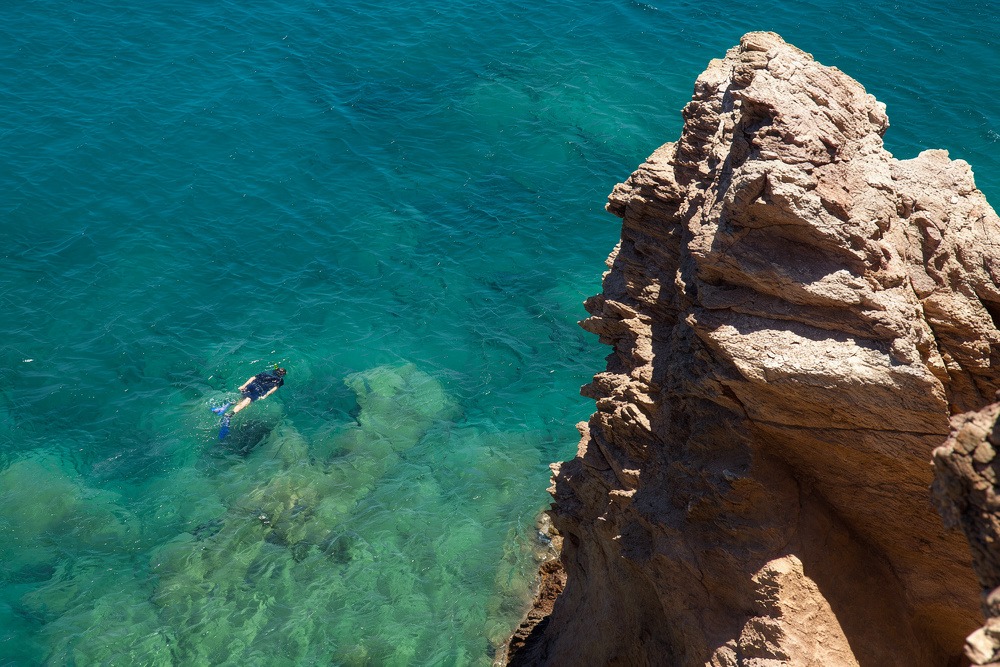
Quick answer: For the best all-around snorkeling near Rethymno, start with Schinaria Beach or the rocky ends of Damnoni Beach on the south coast. Choose Bali for an easier, more sheltered first snorkel. The long beach in Rethymno town is convenient, but its mostly sandy seabed is usually less interesting than a small rocky cove.
Choose your beach
Where should you snorkel?
The best choice depends on whether you value clear water, easy entry, shelter or a quieter coast.
A compact bay with clear water, rock formations and an underwater-focused feel.
More sheltered choices, beach facilities and easier conditions when the sea is settled.
Space, straightforward access and rocky edges without giving up beach comfort.
A smaller south-coast bay for calm-day snorkeling and a slower beach atmosphere.
Schinaria
- Best for
- Clear water and rocky scenery
- Entry
- Sand, pebbles and rock
- Level
- Confident beginner+
- Tip
- Small beach; arrive early
Damnoni
- Best for
- An easy full beach day
- Entry
- Mostly straightforward
- Level
- Most levels
- Tip
- Explore the rocky ends
Bali
- Best for
- Beginners and families
- Entry
- Sandy coves
- Level
- Beginner-friendly
- Tip
- Pick the calmest cove
Ammoudi
- Best for
- Quiet cove snorkeling
- Entry
- Pebbles and rock
- Level
- Confident beginner+
- Tip
- Fewer services than Damnoni
Geropotamos
- Best for
- Open scenery and fewer crowds
- Entry
- Gets deeper quickly
- Level
- Experienced swimmers
- Tip
- Only choose a calm day
Preveli
- Best for
- Scenery and a swim stop
- Entry
- Mixed; can be busy
- Level
- Conditions vary
- Tip
- Snorkeling is the bonus, not the focus
Six places compared
Best snorkeling spots in Rethymno
Rethymno’s most rewarding shore snorkeling is usually where sand meets rock. Rocky walls, boulders and patches of seagrass give small fish somewhere to feed and hide, while a wide sandy bottom can look beautiful but offer less variety.
Schinaria (Skinaria): best overall
Schinaria is the strongest all-around choice for travelers who care more about the water than a large organized beach. This small bay near Plakias is known for clear water and rocky underwater formations. Enter slowly, let any disturbed sand settle, then follow the rocky side of the cove while staying within an easy return to shore.
The beach is smaller and more natural-feeling than Damnoni, with limited parking and fewer services. That makes an early arrival worthwhile in summer. Both Schinaria and Skinaria are used in English, so do not worry if your map uses the other spelling.
Damnoni: best balance of access and scenery
Damnoni works when one person wants to snorkel and everyone else wants a comfortable beach day. The bay is wider and easier than the smaller coves nearby, with seasonal facilities and a relatively simple approach. For the most interesting snorkeling, leave the open sandy middle and explore beside the rocky ends only when the water is calm.
It is also a useful base for a mini beach circuit. Ammoudi, Ammoudaki and Schinaria sit nearby, so you can compare conditions rather than forcing a swim at the first beach you reach.
Ammoudi: best smaller cove
Ammoudi near Plakias is a compact pebbly cove with clear water and rocky edges. It suits travelers who want something quieter than Damnoni without committing to a remote or difficult-to-reach beach. The smaller scale makes it easy to inspect the whole bay before entering.
Bring your own mask and water; services can be limited outside the main summer season. Take care not to confuse this beach with Drymiskiano Ammoudi near Preveli.
Bali: best for beginners and families
Bali is not one beach but a chain of north-coast coves, which gives you options when wind or crowds make one bay less appealing. Varkotopos has a shallower, more enclosed feel, while Karavostasi is the more scenic choice for clear water and rocky edges. Walk around first and choose the cove with the calmest surface that day.
Bali is a practical first try because food, shade and beach facilities are close. Stay away from the harbor, anchored boats and marked boat routes; a sheltered bay is still an active seaside village.
Geropotamos: only when the sea is settled
Geropotamos feels wilder and less enclosed than Bali or the small bays near Plakias. The water becomes deep more quickly and the north coast can be exposed to wind and waves. That can make the beach attractive to confident swimmers on a calm morning—but a poor choice for a beginner or a rough day.
Look at the entire shoreline before getting in. If waves are breaking strongly, the water is cloudy or local signs restrict swimming, save Geropotamos for the view and choose a sheltered cove instead.
Preveli: best as a scenic bonus
Preveli is unforgettable for its palm forest, gorge and river-meets-sea landscape. It can be enjoyable to swim beside the rocky edges when conditions allow, but it is not the most dependable choice for a snorkeling-first day. Crowds, boat activity, access and changing water conditions can all affect the experience.
Visit Preveli for the whole setting, then treat snorkeling as a bonus. Follow every posted sign, keep clear of boat approaches and do not enter any area restricted for swimming near the river outlet.
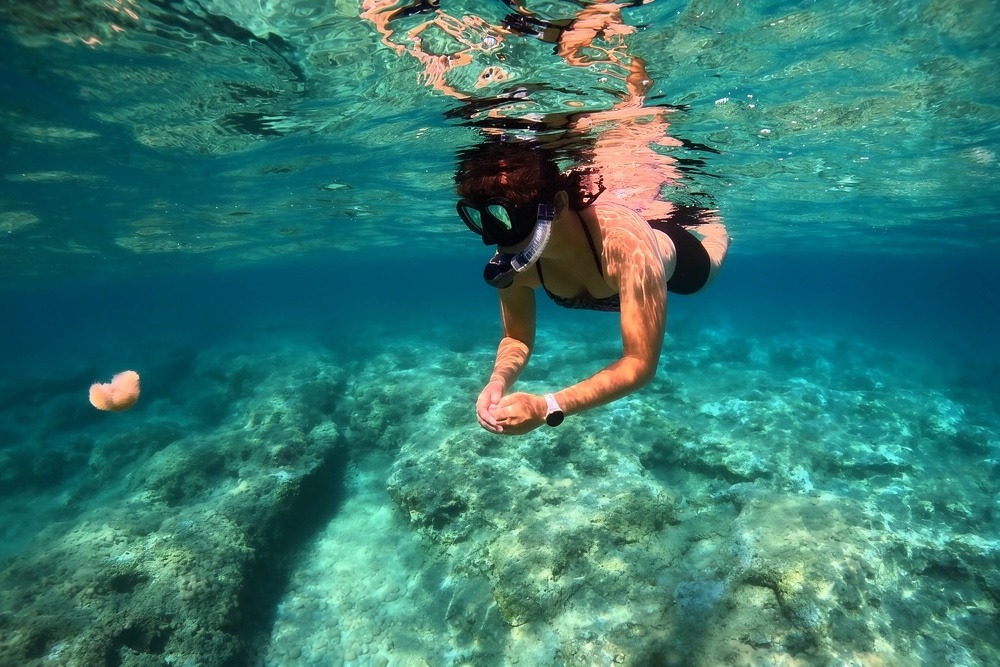
Move slowly and look around rocks and seagrass rather than chasing wildlife.
Under the surface
What marine life can you see?
Set the right expectation: Crete is the Mediterranean, not a tropical coral reef. The reward is clear water, shifting light, rock formations and the chance to notice smaller details.
Depending on the beach, season and your luck, you may see schools of sea bream or mullet, damselfish, wrasse, sea urchins and an octopus tucked into a rocky opening. Patches of Posidonia oceanica are living Mediterranean seagrass habitat—not weeds or waste.
- Float quietly; fish return when splashing stops.
- Scan crevices without putting your hands inside.
- Observe animals from a distance and never feed or chase them.
- Do not promise yourself a turtle sighting; if one appears, give it space.
Before you enter
Snorkeling safety in Rethymno
The best beach on a calm day can be the wrong beach in wind or swell. Conditions matter more than any fixed ranking.
- Never go alone. Snorkel with a partner and tell someone where you are.
- Check flags and signs. If swimming is restricted, do not enter—even if the water looks inviting.
- Stay close to shore. Swim parallel to the beach and keep enough energy for the return.
- Avoid boat traffic. Stay out of harbors, marked channels and areas used by excursion boats.
- Use visibility. A bright rash guard or snorkel float helps others see you in open water.
- Protect your feet. Water shoes help at pebbly entries; fins should never tempt you into conditions beyond your ability.
- Do not touch wildlife. Sea urchin spines, sharp rock and hidden animals can turn a small mistake into a painful one.
- Know when to stop. Leave the water if you feel cold, tired, breathless or uncertain.
Timing and conditions
Best time to snorkel in Rethymno
May through October is the practical snorkeling season for most visitors. June and September often give the best balance of warm weather, active beach services and softer crowds, while July and August bring the warmest, busiest beach days.
Morning is often a smart starting point, but it is not a guarantee. A calm afternoon is better than a windy morning. Check the actual sea in front of you: smooth surface, good visibility and an easy entry matter more than the hour on the clock.
Pack simply
What to bring
You do not need a boat or a large equipment list for an easy shore snorkel, but a comfortable mask matters. Test the seal before your beach day and bring your own gear if you plan to visit a smaller cove where rentals may not be available.
- A well-fitting mask and a standard snorkel
- Fins you can control without kicking the seabed
- Water shoes for hot pebbles and rocky entries
- A bright rash guard, sun protection and drinking water
- A snorkel float for visibility in more open water
- A small dry bag for keys and essentials
Two easy plans
Build a better beach day
Bali + Rethymno
Choose the calmest Bali cove in the morning, stop for lunch by the water, then return to Rethymno for an Old Town evening.
Schinaria + Damnoni
Start at Schinaria before the small beach fills, move to Damnoni for comfort, and finish with dinner in Plakias.
Planning a longer stay? Use the complete Rethymno beaches guide and the visitor guide to Rethymno to match beach days with your base and transport.
Common questions
Snorkeling in Rethymno FAQs
Is Rethymno good for snorkeling?
Yes—especially at smaller beaches with rocky edges and clear, calm water. Rethymno is better for relaxed Mediterranean shore snorkeling than for coral reefs or large concentrations of tropical fish.
Which beach is best for beginner snorkeling?
Bali is usually the easiest place to start because you can compare several sheltered coves and stay close to facilities. Damnoni is another practical choice on a calm day. Beginners should remain close to shore and avoid deep, exposed beaches.
Can you snorkel from Rethymno Town Beach?
You can when swimming is permitted and the sea is calm, but the mostly sandy seabed is often less interesting than Schinaria, Ammoudi, Damnoni or Bali. Stay outside harbor and boat areas and respect all beach flags and marked turtle nests.
Do I need a snorkeling tour or guide?
Not for a simple shore snorkel in a calm, beginner-friendly cove. A qualified guide can still be worthwhile if you are new to the activity, do not have equipment, want a boat-access spot or would feel safer with local supervision.
What is the best month for snorkeling in Rethymno?
June and September are excellent all-around choices. July and August are warmer but busier, while May and October can be peaceful if the weather and sea conditions cooperate.
Can I see sea turtles while snorkeling?
A sighting is possible in Crete but should never be expected or promised. If you encounter a turtle, keep your distance, do not chase or touch it and never block its route to the surface.
Make the rest of the trip easier
Plan Rethymno with fewer tabs and less guessing
Keep beaches, food, villages, practical tips and map-ready ideas together in the 90+ page Rethymno Travel Guide PDF.

