
Oxi Day: Greece’s Defiant Cry of “No!” and Its Enduring Spirit in Crete
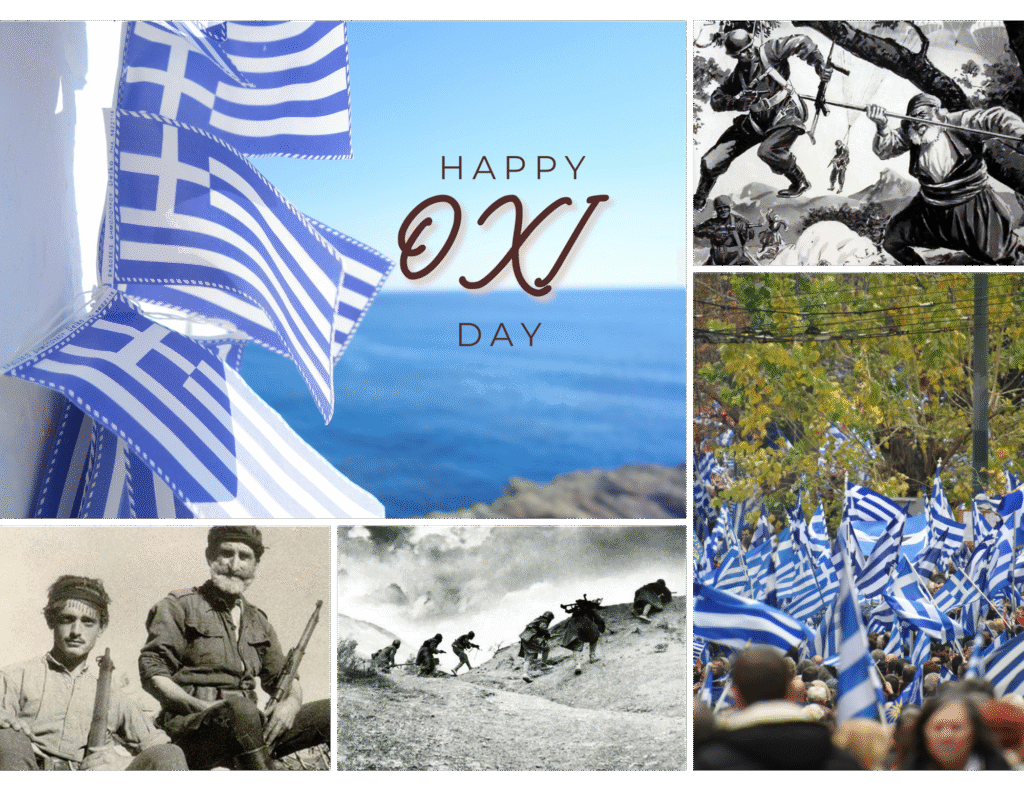
Oxi Day in Greece, celebrated on October 28, is one of the country’s most important national holidays. Each year, the nation comes together to honor the historic “Oxi” (“No”)—a powerful symbol of courage, unity, and resistance.
It is not merely a celebration of a word, but of what that word represents: freedom, dignity, and resistance against oppression. For Greeks everywhere—both in the homeland and the diaspora—Oxi Day is a reminder of their shared heritage, the sacrifices of their ancestors, and the unbreakable will that has defined Greece throughout history.
In Crete, this day holds an especially powerful significance. The island’s proud history of resistance and bravery, from ancient times to World War II, makes Oxi Day not just a commemoration, but a deeply emotional tribute to Cretan identity itself.
The Origin of Oxi Day
The story of Oxi Day begins in the early hours of October 28, 1940, during the dark days of World War II. Greece, led by Prime Minister Ioannis Metaxas, had maintained a neutral stance despite growing pressure from Benito Mussolini’s Italy, which was allied with Nazi Germany.
At 3:00 a.m., the Italian ambassador to Greece, Emanuele Grazzi, arrived at Metaxas’s residence in Athens, delivering an ultimatum from Mussolini. The demand was simple yet humiliating: Greece was to allow Axis forces to enter and occupy strategic locations within the country—or face war.
Metaxas’s response was as brief as it was powerful. In French—the diplomatic language of the time—he said:
“Alors, c’est la guerre.” (“Then, it is war.”)
While those exact words weren’t “Oxi,” the Greek people interpreted the message in their own way. News of Metaxas’s defiance spread like wildfire, and crowds took to the streets shouting “ΟΧΙ!” (Oxi!) in spontaneous displays of national pride.
That single word united an entire nation. Greece had chosen resistance over surrender.
Greece Enters the War
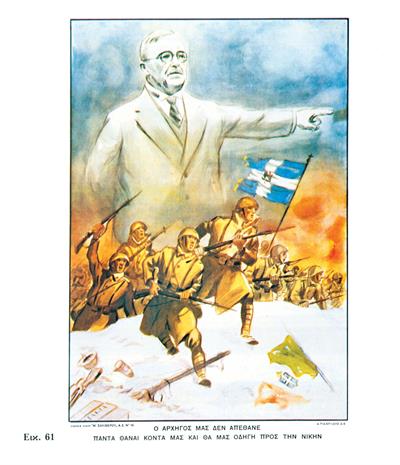
Within hours of the ultimatum, Italian forces invaded Greece from Albania. But the Greek army, vastly outnumbered and under-equipped, launched a stunning counterattack, pushing the Italians back deep into Albanian territory.
It was the first time during World War II that the Axis powers had suffered a significant defeat. The victory inspired hope across Europe and delayed Germany’s advance into the Soviet Union—changing the course of the war.
Winston Churchill famously said:
“Hence we will not say that Greeks fight like heroes, but that heroes fight like Greeks.”
This phrase perfectly captures the international admiration Greece earned through its bravery and determination.
The Meaning of “Oxi” Today
Oxi Day represents much more than a moment in history—it embodies the Greek spirit of resistance, the courage to say “no” in the face of impossible odds, and the unwavering love for freedom and independence.
Today, Oxi Day stands as a reminder that even the smallest nation can change the world through unity, pride, and conviction. It is a day for remembering not just military triumphs, but the resilience of ordinary people—men, women, and children—who refused to be conquered.
For Greeks, saying “Oxi” is part of their national character. It’s an attitude of defiance, dignity, and faith in justice. It echoes through Greek history—from the ancient Spartans at Thermopylae to the revolutionaries of 1821, and from the resistance fighters of WWII to the Cretan patriots who fought for freedom.
How Oxi Day Is Celebrated in Greece
Across the country, October 28th is marked by both national pride and solemn remembrance. It is one of two major national holidays in Greece, alongside March 25th, the anniversary of the Greek War of Independence.
Here’s how it’s celebrated:
- Military and Student Parades:
Major cities like Athens and Thessaloniki host impressive parades featuring military units, school children, scouts, and local groups proudly waving the Greek flag. - Church Services and Memorials:
The day begins with Divine Liturgy and memorial services for fallen soldiers. Wreaths are laid at monuments dedicated to heroes of World War II. - Flags and Decorations:
Every home, school, and public building is decorated with the blue and white Greek flag. In villages, locals hang flags along streets and balconies, creating a wave of national color. - Traditional Music and Dance:
Folk dances, patriotic songs, and gatherings follow, celebrating Greek identity through music and community. - Film and Media:
Greek television often airs documentaries, historical films, and interviews with veterans and historians, keeping the memory of Oxi Day alive for younger generations.
It’s a day of pride, reflection, and unity—a reminder that the Greek people have always stood tall, no matter the challenge.
Oxi Day in Crete: The Island of Defiance
Few places in Greece embody the spirit of “Oxi” quite like Crete. Known for its rugged beauty and fiercely independent people, Crete has a long history of resistance against invaders—from Venetians and Ottomans to Nazis during World War II.
When the call to defend Greece came in 1940, Cretan men volunteered en masse, joining the army and fighting bravely in the mountainous battlefields of Epirus and Albania. Many never returned, but their courage helped shape the legend of Oxi Day.
However, Crete’s defining moment of WWII came a year later, during the Battle of Crete (May 1941).
The Battle of Crete: A Testament to the Cretan “Oxi”
After the German invasion of mainland Greece, Hitler turned his attention to Crete. In May 1941, the island became the stage for one of the most remarkable and heroic battles of the war.
The Germans launched Operation Merkur (Operation Mercury)—the first large-scale airborne invasion in history. Thousands of paratroopers descended upon the island, expecting a swift victory.
But what they found was unexpected resistance.
The people of Crete—farmers, shepherds, women, even children—took up whatever weapons they could find to defend their island alongside Allied soldiers. Many fought with nothing more than farming tools and stones.
This spontaneous, civilian-led resistance stunned the Germans. Despite eventually taking control of the island after ten days of fierce fighting, the Battle of Crete cost them so many casualties that Hitler never again attempted a major airborne invasion.
The bravery and defiance of the Cretan people became legendary. Their resistance continued long after the battle, with local groups forming guerrilla networks that harassed German forces until the end of the war.
In every village across Crete, there are memorials and stories passed down through generations—stories of families who hid Allied soldiers, sabotaged enemy operations, or paid the ultimate price for freedom.
Oxi Day Traditions in Crete
In Crete, Oxi Day is not just a national holiday—it’s deeply personal. The island’s people celebrate it with a mixture of pride, reverence, and emotion.
- Local Parades:
Every town and village holds parades, led by students in traditional costumes. Veterans, local officials, and clergy take part, paying tribute to the island’s fallen heroes. - Church Services:
Special memorial liturgies are held, honoring those who fought and died for Greece’s freedom. Wreaths are placed at war monuments, often followed by moments of silence. - Music and Dance:
After the formal ceremonies, the island comes alive with traditional Cretan music—the sound of the lyra, the rhythm of the laouto, and the dances that symbolize both joy and resilience. - Patriotic Speeches and Poems:
Schools organize performances and poetry recitals where children read passages about Oxi Day, Metaxas’s defiance, and the bravery of Greek soldiers. - Commemorations at Historical Sites:
In regions like Chania, Rethymno, and Heraklion, people visit war memorials, old resistance hideouts, and museums dedicated to the Cretan role in WWII.
For many Cretans, the day is not only about the past—it’s about identity. To be Cretan is to be proud, free, and unbreakable. And Oxi Day encapsulates that perfectly.
Rethymno and Oxi Day
In Rethymno, Oxi Day is celebrated with heartfelt devotion. The city and its surrounding villages suffered greatly during the German occupation, and their stories are forever intertwined with the spirit of resistance.
- Student Parades:
The streets of Rethymno fill with students waving flags, marching bands playing, and locals cheering. The parade usually ends near the city’s central square, where officials and families gather to honor the fallen. - Ceremonies at Memorials:
Wreaths are laid at the War Memorial of Rethymno, as well as at monuments in nearby villages like Arkadi, a site that symbolizes Cretan heroism and sacrifice. - Cultural Events:
Schools and cultural associations organize exhibitions, presentations, and reenactments of historic moments from 1940 and the Battle of Crete, helping younger generations connect with their heritage.
Walking through Rethymno on Oxi Day, you can feel the pride in the air—flags waving from balconies, church bells ringing, and the powerful sense of unity that defines Greek patriotism.
Why Oxi Day Still Matters
More than 80 years after that fateful morning in 1940, Oxi Day remains one of the most inspiring chapters in Greek history.
It reminds us that freedom is never guaranteed, that it must be defended with courage and conviction. It reminds us that saying “no” to injustice is not an act of stubbornness—but an act of dignity.
In a world that often values convenience over conviction, Oxi Day teaches us the importance of standing firm, even when the odds seem impossible.
For the people of Crete and all of Greece, it is not just a date—it is a living legacy. The spirit of “Oxi” beats in every Greek heart, every flag raised, and every child who grows up hearing the stories of their ancestors’ bravery.
The Eternal Power of “Oxi”
Oxi Day is more than a national holiday—it is a story of courage, sacrifice, and faith in freedom. It is the voice of a small nation that refused to bow down to tyranny and instead chose to fight for its dignity.
From the mountains of Epirus to the villages of Crete, from the streets of Athens to the shores of Rethymno, the echo of that defiant “No” still resonates.
In Crete, where resistance runs in the blood of its people, Oxi Day feels like a celebration of life itself—of what it means to be Greek, to be free, and to stand tall no matter the cost.
“Oxi” was more than a word. It was, and always will be, a way of life.

